5 Ways to Make Contest Judging Fair
Table of Contents
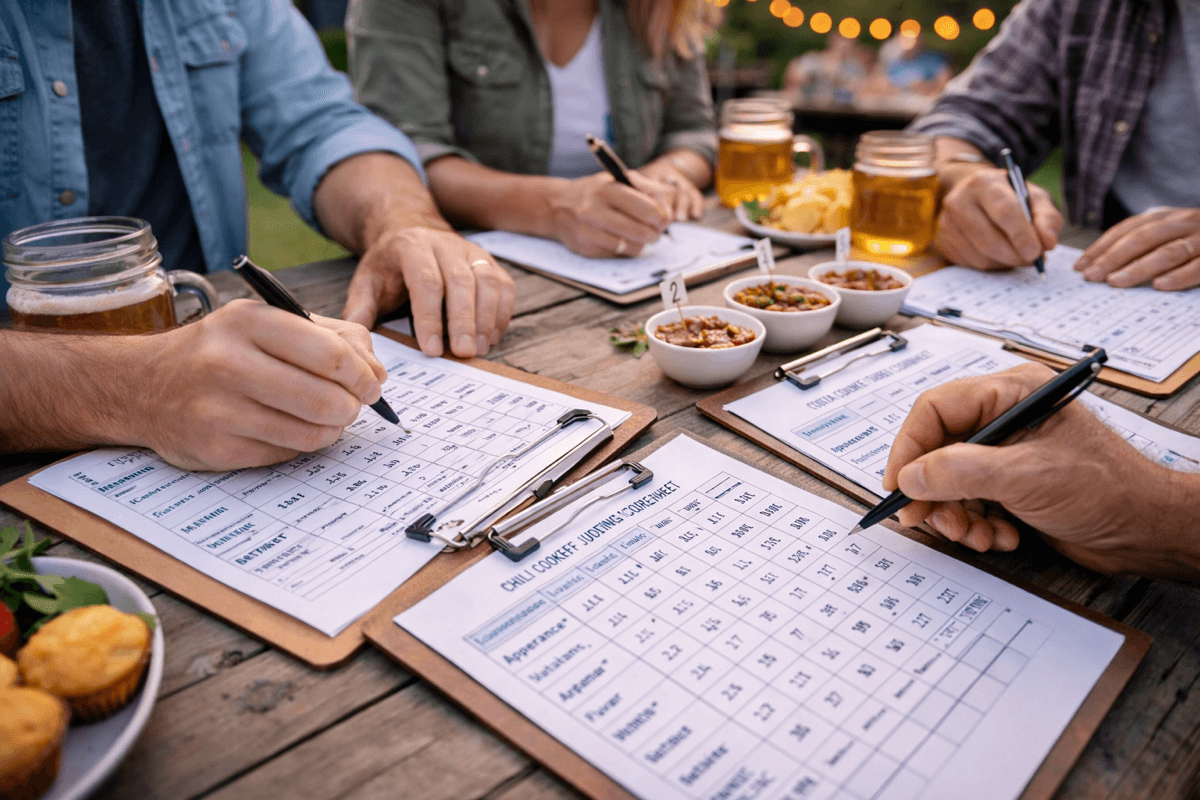
Nothing ruins a friendly competition faster than questions about fairness. "The judges always pick their friends." "Bob knew his entry when he scored it." "The calculations don't add up." Once these seeds of doubt plant, the competition's integrity—and all the fun—evaporates.
The good news: fair judging isn't complicated. These five techniques, used together, transform any amateur contest into a credible competition everyone trusts.
1. Implement Blind Judging
The single most important fairness measure is preventing judges from knowing whose entry they're scoring.
How to do it:
- Assign each entry a number when it arrives
- Display entries by number only—no names, no hints
- Keep the number-to-name key secure until scoring concludes
- Reveal which baker/cook made which entry only during the announcement
Why it works:
Even well-intentioned judges carry biases. They might score a friend's entry higher without realizing it. They might be harder on a rival. Blind judging removes these dynamics entirely.
Common mistakes to avoid:
- Participants announcing their entries ("Everyone try my cookies—number 7!")
- Distinctive serving dishes or containers
- Judges conferring about which entry belongs to whom
Provide standardized plates or containers. Enforce a "no hints" rule. Blind judging only works when it's actually blind.
2. Use Weighted Categories
A single "rate this 1-10" score invites arbitrary judgment. Multiple weighted categories force judges to evaluate specific qualities.
Standard category structure:
| Category | Purpose |
|---|---|
| Taste/Flavor | What matters most |
| Texture/Execution | Technical quality |
| Presentation | Visual effort |
| Creativity | Innovation and originality |
Why weights matter:
Weights communicate what your competition values. A 40% taste weight says "the best-tasting entry should win." A 40% presentation weight says "this is really about decoration."
Most cooking competitions weight taste highest (35-40%). Adjust based on your event's purpose.
Implementation:
- Define categories before competition
- Share weights with competitors and judges
- Use software or spreadsheets that calculate weighted scores automatically
- Manual calculation introduces errors—avoid it
3. Require Independent Scoring
Judges discussing entries before scores are locked creates groupthink. One confident voice can sway uncertain judges.
How to ensure independence:
- Judges score individually, without discussion
- No comparing scores until all are submitted
- Physical separation during scoring (if practical)
- Digital scoring tools that lock responses
The protocol:
1. Judge tastes entry
2. Judge records scores immediately
3. Judge cannot see others' scores
4. Discussion happens only after all scores are locked
This preserves genuine diversity of opinion. Three judges who independently score an entry 8, 7, and 9 provide meaningful data. Three judges who "agreed it was about an 8" provide less information.
4. Document Everything
Transparency builds trust. When participants can see exactly how scores calculated, disputes disappear.
What to document:
- Every judge's score for every entry in every category
- The calculation method for final scores
- Any tiebreaker rules and how they applied
- Total scores with breakdowns available
How to share:
- Display full score breakdowns during the reveal
- Make detailed results available after the event
- Export data in formats people can verify
When someone questions a result, you can show exactly how scores added up. The math speaks for itself.
5. Establish Rules Before Competition
Fairness disputes often arise from ambiguity, not cheating. "I didn't know presentation counted." "Why did her entry win when we tied?"
Rules to establish upfront:
- Scoring categories and weights
- Who can judge (competitors? family members?)
- What "homemade" means
- How ties are broken
- Whether scores can be changed after submission
- Timing: when does judging open and close?
How to communicate:
- Include rules in invitations
- Post rules visibly at the event
- Brief judges before scoring begins
- Refer to rules when questions arise
The goal isn't creating bureaucracy—it's preventing the awkward moment when you have to invent rules mid-competition.
Putting It Together
These techniques reinforce each other:
- Blind judging prevents bias about who made an entry
- Weighted categories prevent arbitrary judgment about what makes something good
- Independent scoring prevents judges from influencing each other
- Documentation proves how results were determined
- Upfront rules establish what everyone agreed to
A competition using all five techniques feels professional without feeling stuffy. Participants trust the process. Winners feel they earned it. Losers understand exactly what they could improve.
Technology Helps
Manual implementation of these techniques requires significant effort: printing numbered scorecards, collecting papers, calculating weighted averages, preventing judges from conferring.
Digital scoring tools handle the logistics automatically. Judges submit scores from their phones—no way to see others' responses. Weighted averages calculate instantly—no arithmetic errors. Full results export for transparency. The reveal happens with one click.
The technology isn't the point, though. Fair judging principles work whether you use pen and paper or sophisticated software. What matters is committing to these practices and communicating them clearly.
When Perfect Fairness Isn't the Goal
One caveat: some competitions intentionally embrace subjectivity. A "Crowd Favorite" award that lets everyone vote prioritizes popularity over objective quality—and that's fine. A kids' competition might weight "effort" heavily to reward participation.
Know what you're optimizing for. If you want the objectively best entry to win, use these techniques. If you want the most-loved entry to win, different rules apply.
Most successful competitions include both: official judging using fair principles, plus a separate crowd favorite category that embraces democratic chaos.
Building Trust Over Time
First-year competitions benefit most from explicit fairness measures. As your event becomes a tradition and participants trust the process, you can relax some formality.
But even long-running competitions benefit from these principles. The year you get sloppy with blind judging is the year someone cries foul.
Fair contests create better memories, stronger traditions, and competitors who come back year after year. The extra effort to judge fairly is always worthwhile.
Running a competition? RevealTheWinner handles blind scoring, weighted categories, and independent submission automatically. Fair judging without the logistics headache. Learn more →
Related Articles:
- How to Run a Family Chili Cookoff
- Scoring Categories Deep Dive
- The Psychology of the Big Reveal
Keywords: fair contest judging, unbiased scoring, blind judging, competition fairness, how to judge fairly, contest scoring tips